

OPSQUILL STUDIO Debate
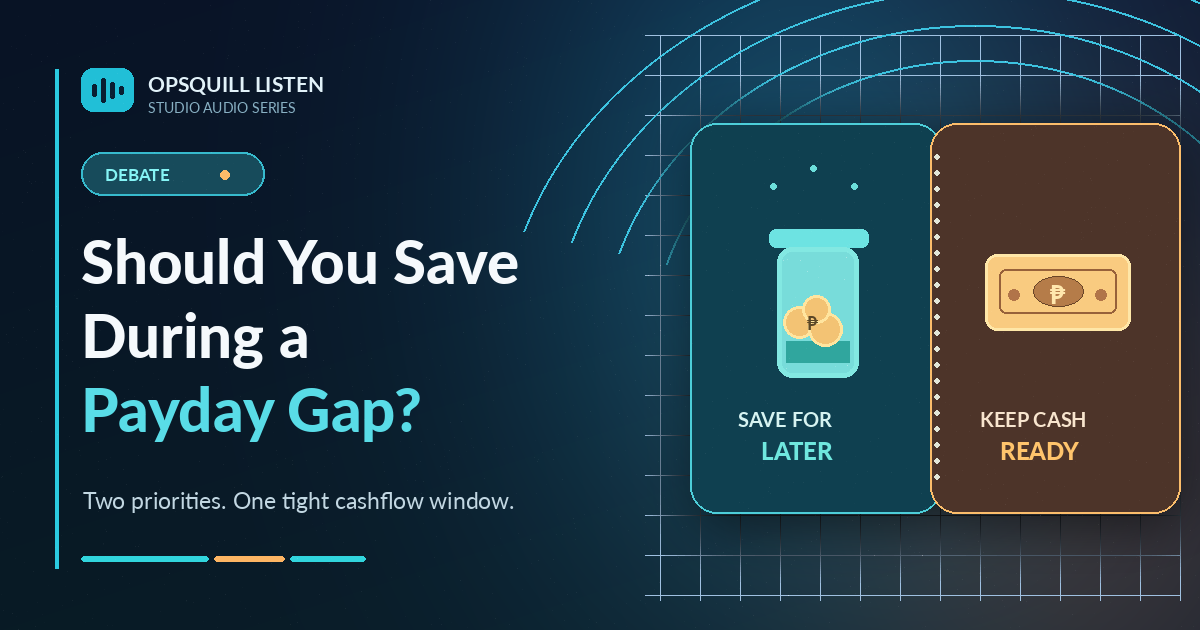
Should You Save During a Payday Gap? — Debate
Listen here without leaving Opsquill Studio.
Select Play recording to load the audio securely.
When the days before payday feel tight, should a household protect its savings routine or keep more cash available for essentials? This Debate considers the trade-offs without easy answers.
Introduction
Saving money is generally a sensible financial habit. But what happens when setting money aside leaves too little available to cover essential expenses before the next payday?
This Debate explores the tension between building savings for the future and maintaining enough accessible cash for immediate financial needs. Both priorities matter, and the right balance can depend on the household's circumstances.
What You May Hear
Should saving remain a priority when everyday cash is running low? This discussion may consider the trade-offs between maintaining a regular savings habit and keeping enough money available for bills, food, transport and unexpected expenses before payday.
Your Thoughts
If moving a voluntary savings transfer would protect the week before payday, would you change its date—or keep the savings routine? What would decide it for you?
Production Credits
AI-generated audio discussion created using NotebookLM. Original Studio Note, ideas and editorial direction: Opsquill Studio.
Continue Exploring
Listen
How Bill Timing Breaks Your Budget — Deep Dive
A monthly budget may look balanced while the days between paydays feel unexpectedly tight. This Deep Dive invites listeners to consider how bill timing, low balances, and financial flexibility shape the experience.
Listen
Why Payday Gap Tracking Fails — Critique
Tracking the days between paydays can reveal a fragile balance, but the numbers can also mislead. This Critique asks when cashflow forecasts clarify financial pressure—and when their assumptions fall short.
Studio Note
Why Budgeting and Cashflow Are Not the Same
A monthly budget can show money left over while a bill remains impossible to pay on time. The difference is not necessarily how much we earn or spend, but when the money is actually available.
Leave a Reply